Maximum Frequency Stack
Explore how to create a FreqStack data structure that supports pushing values and popping the most frequent elements efficiently. Understand how to track frequencies and handle ties by returning the most recently pushed item among those tied. This lesson equips you with designing a frequency-based stack suitable for coding interviews.
We'll cover the following...
Statement
Design a stack-like data structure. You should be able to push elements to this data structure and pop elements with maximum frequency.
You’ll need to implement the FreqStack class that should consist of the following:
-
FreqStack: This is a class used to declare a frequency stack.
-
Push(value): This is used to push an integer data onto the top of the stack.
-
Pop(): This is used to remove and return the most frequent element in the stack.
Note: If there is a tie for the most frequent element, then the most recently pushed element is removed and returned.
Constraints:
-
value -
At most, calls will be made to Push() and Pop().
-
It is guaranteed that there will be at least one element in the stack before calling Pop().
Examples


Understand the problem
Let’s take a moment to make sure we have correctly understood the problem. The quiz below helps us to check that we are solving precisely the right problem:
Maximum Frequency Stack
What is the output if four Pop() calls are made onto this stack?
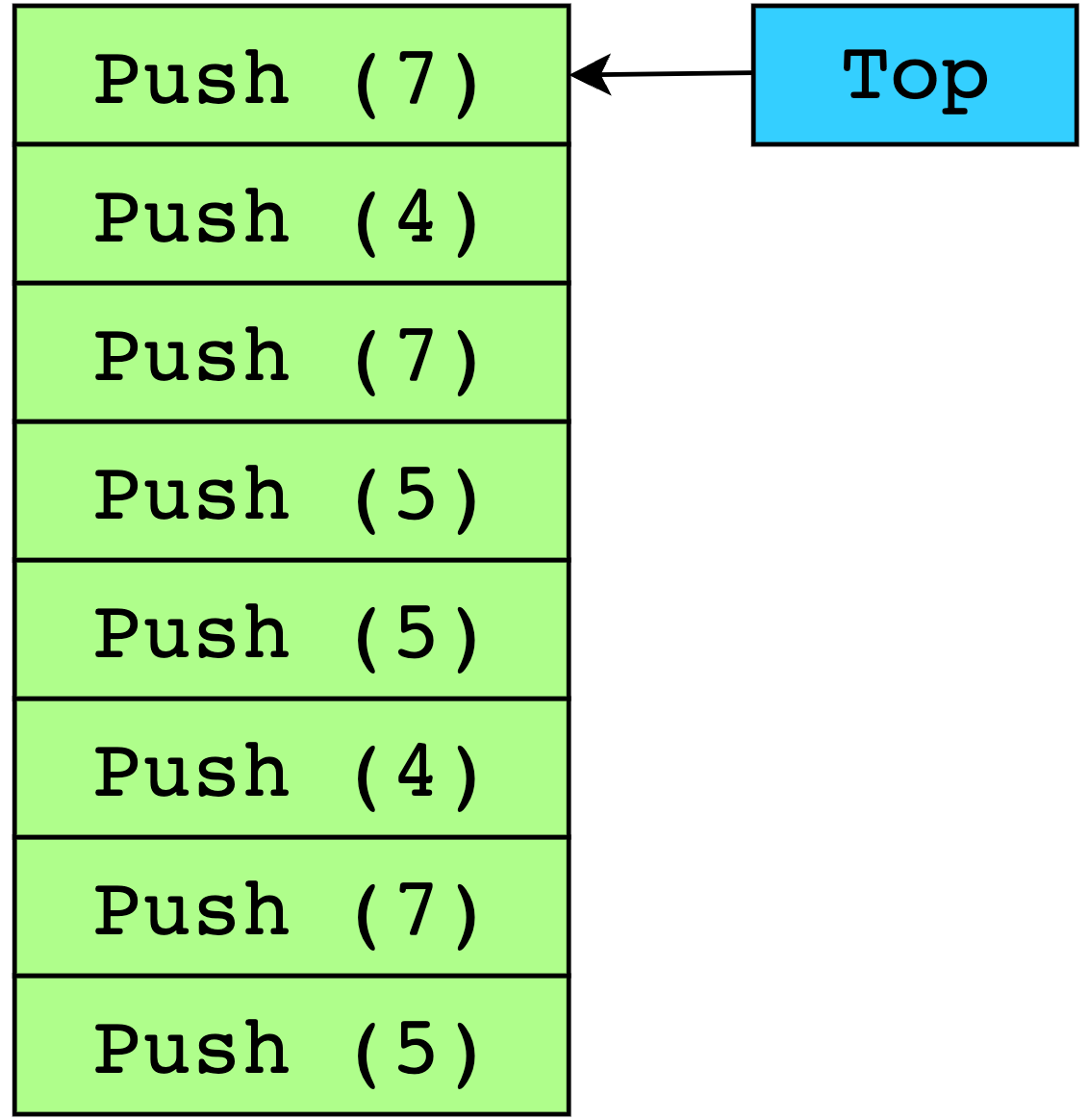
[5, 4, 7, 5]
[5, 7, 4, 5]
[7, 5, 4, 7]
Figure it out!
We have a game for you to play. Rearrange the logical building blocks to develop a clearer understanding of how to solve this problem.
Try it yourself
Implement your solution in the following coding playground.
import java.util.*;class FreqStack {public FreqStack() {// Write your code here}public void push(int value) {// Write your code here}public int pop() {// Replace this plaecholder return statement with your codereturn -1;}}