DevPath Wrapped provides a data-driven look at how software engineers sharpened their skills in a year shaped by Generative AI and rising architectural complexity. The findings are useful for both job seekers and hiring managers alike, offering valuable insight into how developers spent their time learning in 2025.
DevPath Wrapped: How Developers Learned & Leveled Up in 2025
DevPath Wrapped: How Developers Learned & Leveled Up in 2025

Your Year in Learning#
Every year, millions of business decisions are shaped by what developers choose to learn.
This whitepaper brings that story to the surface. It’s a snapshot of how software engineers around the world spent their time leveling up, preparing for interviews, exploring new technologies, and building long-term skills.
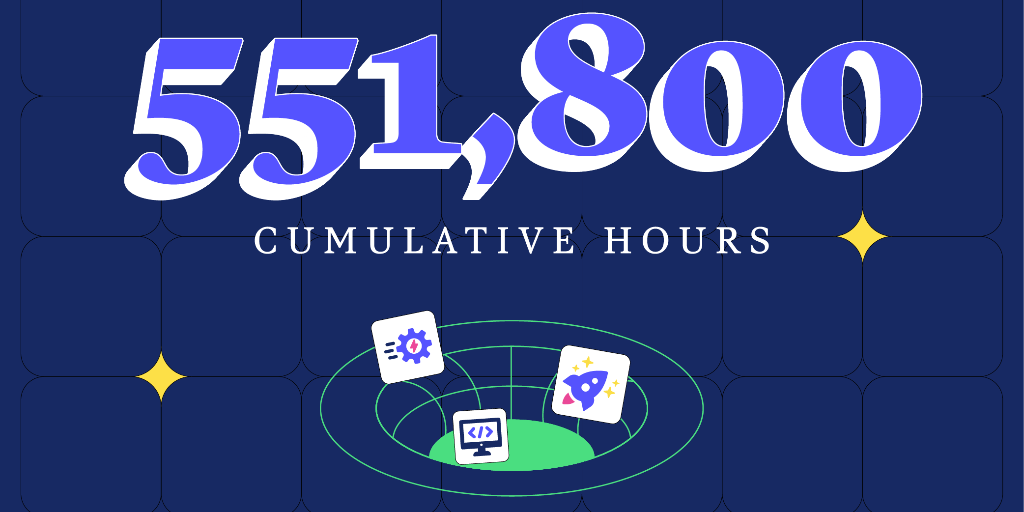
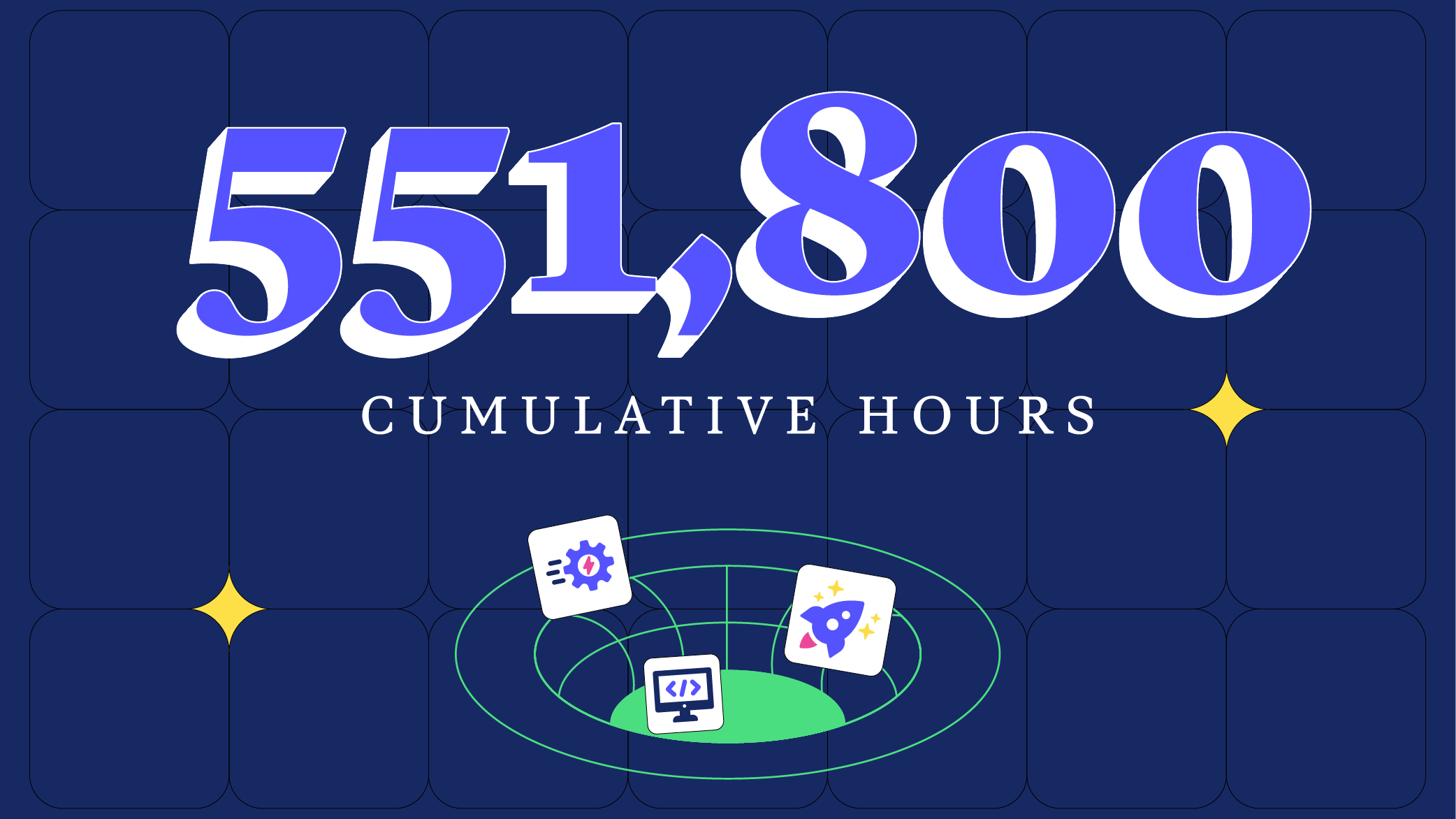
In 2025, developers logged 551,800 cumulative learning hours on DevPath — the equivalent of nearly 22,992 days of focused learning. That’s well over half a century of engineering experience gained in a single year.
Here's a deeper look at how DevPath learners spent their time:
403,521 hours in Courses
136,689 hours in Paths
5,260 hours in Projects
3,717 hours in CloudLabs
1,979 hours in Mock Interviews
635 hours in Assessments
These patterns illustrate a community that is deeply committed to skill-building. DevPath learners weren’t simply sampling topics; they were investing in long-form study, hands-on practice, and real preparation for interviews and role transitions.
This report highlights what engineers learned, where they spent their time, which topics rose the fastest, and what this all says about the future of the industry.
Methodology: How We Measured Your Year#
This study is built from internal engagement data across the DevPath platform between January 1 and December 1, 2025. All data is represented in cumulative learning hours, and all insights are derived from anonymized, aggregated datasets.
Aggregated learning time was initially represented in seconds, and then converted to hours with the following formula:
Learning hours = learning seconds divided by 3600
Key Findings: What Defined Engineering Learning in 2025#
DevPath learners relied on a mix of structured courses, guided paths, mock interviews, hands-on labs, and project-based work to build skills this year. Each avenue serves a different need: courses for deep, focused study; paths for personalized, sequential learning; and practice tools for applying concepts under realistic constraints.
The distribution of hours shows how engineers combined these formats to round out their skill growth. Most of their time went into long-form learning, with steady engagement in practice-oriented tools that help reinforce concepts. The charts that follow showcase how those choices played out across areas like System Design, AI workflows, language trends, and core engineering technologies.

Interest in Generative AI is on the Rise#
The MCP Fundamentals for Building AI Agents course grew from 0 to 2,484 learning hours in 2025, reflecting the broader shift toward agentic systems and AI-assisted engineering. This was one of the clearest signs of interest in new workflow patterns brought on by modern AI stacks.

Generative AI went from an experimental curiosity to a daily tool in 2025. The learning patterns reflect a shift from surface-level experimentation to structured skill-building. Developers weren't "trying out" AI tools. They were figuring out how to build reliable workflows around them.
Here's a look at the other most popular Generative AI Courses:

The strongest signal was the growth of MCP Fundamentals for Building AI Agents, which went from zero to 2,484 learning hours in under a year. Interest in AI agents outpaced interest in prompt-writing or introductory material, which suggests engineers are moving upstream from simple tool usage to building the systems that support those tools.
The most popular courses cluster into two themes:
1. Agentic and architectural AI work.
Courses on agent frameworks, agent-oriented System Design, and AI-assisted pipelines show that engineers are wrestling with questions like reliability, orchestration, and integration with existing services. This is a long-term skill shift, not a trend response.2. Productivity tooling that solves daily friction.
Copilot, Cursor, and similar courses drew consistent engagement because they directly address repetitive work. Engineers appear to be using AI primarily to remove bottlenecks rather than replace decision-making.
Across both categories, the common thread is workflow impact. Engineers leaned into GenAI when it reduced cognitive load, made debugging easier, or simplified complex architectural tasks. And when they sought deeper knowledge, they gravitated toward courses that gave them the scaffolding to build agentic systems with predictable behavior.
GenAI didn't flatten engineering roles in 2025. It expanded them. The data shows that developers now need a mix of fundamental System Design skills and the ability to integrate AI tools responsibly into the software lifecycle.
A Preference for Paths & Personalized Learning#
Paths accounted for the second-highest share of learning hours this year, which suggests that many learners may be gravitating toward more guided, sequential formats. Unlike single courses, Paths provide a structured way to build skills across multiple levels or domains, and the steady engagement here could signal a desire for clearer learning roadmaps in a landscape with growing technical breadth.

Educative's adaptive checkpoints likely played a role too. The ability to surface personalized recommendations and adjust pacing based on user's experience level and interview timeline make Paths a practical option for engineers trying to balance depth with efficiency. As workloads and tools expand, having a curated route through a topic might help reduce the cognitive overhead of choosing what to learn next.
The data doesn't necessarily tell us why individual learners selected this format, but the aggregate trend points to interest in more intentional, long-form progression. Paths appear to offer a middle ground between the flexibility of standalone courses and the structure engineers may need when tackling complex or unfamiliar areas.
Other Noteworthy Software Development Trends#
Beyond course-level engagement, several broader patterns emerged in how engineers approached their tools and languages in 2025.
The rankings below reflect where developers invested their learning time outside of interview preparation or AI-related material. These choices offer a window into the day-to-day realities of modern engineering work: which languages teams rely on, which technologies continue to anchor infrastructure, and where engineers sought stronger hands-on fluency.

Python held a comfortable lead, which aligns with its growing footprint in AI-assisted workflows, automation scripts, internal tooling, and data-heavy backend systems. Developers seem to be choosing Python both for its speed of iteration and for the expanding ecosystem around agentic patterns, orchestration, and rapid prototyping.
C++'s position near the top highlights an ongoing need for low-level performance work, especially in systems that demand tight control over memory, concurrency, and latency. The data suggests that even with new abstractions arriving every year, engineers continue sharpening core systems programming skills because production workloads still depend on them.
JavaScript and Java remain steady fixtures in the top five. JavaScript's ranking is tied to the ongoing evolution of frontend frameworks and full-stack environments, while Java continues to anchor large-scale enterprise systems where reliability and long-term maintainability matter more than novelty.
C# rounds out the list with consistent engagement driven by cross-platform development and large enterprise codebases. The interest levels here reflect organizations investing in the longevity of their existing applications, not rewriting them.
Taken together, these patterns show that while AI reshaped workflows, it didn't displace foundational language skills. Engineers continued to reinforce the languages their systems already rely on, and that stability shows up throughout the data.

Kubernetes and Docker remained firmly at the top, underscoring how central containerization and orchestration have become to modern software delivery.
Engineers turned to these technologies for hands-on practice rather than conceptual overviews, which suggests they're dealing with real operational challenges: scaling applications, tuning resource usage, and managing deployments across multi-service environments.
Git's placement in the top three shouldn't be seen as basic or remedial. Instead, it reflects ongoing friction in collaborative workflows. Teams appear to be tackling version control issues that surface only in complex, fast-moving environments: branching discipline, merge conflicts, history rewriting, and release coordination.
The interest in Ansible and Helm points to the operational maturity curve many teams are climbing. As systems grow more distributed, engineers look for ways to standardize deployments, strengthen configuration management, and reduce drift across environments. These tools are becoming part of the baseline skill set for engineers who touch production systems, even if they aren't formally working in DevOps roles.
Across all five technologies, the throughline is operational complexity. The tools developers leaned into this year are the ones that help manage scale, consistency, and automation in environments where reliability is non-negotiable.
Wrapping up#
The 551,800 learning hours logged this year point to an industry focused on depth, clarity, and long-term skill building. Engineers leaned into the fundamentals that keep modern systems running, and into the emerging tools reshaping how software gets built.
Generative AI found its place not as a replacement for core engineering skills, but as a complement to them. The strongest interest clustered around agentic patterns, integration workflows, and productivity tooling that reduces cognitive strain. Engineers treated AI as another layer in the stack, not a shortcut.
Language and technology trends echoed the same theme. Python, C++, Kubernetes, Docker, Git, and Helm drew engagement because they sit at the center of day-to-day engineering work. These aren't discretionary skills. They're the backbone of production-grade software, and the data shows developers reinforcing them accordingly.
Taken together, the year's learning patterns paint a consistent picture: engineers are preparing for an environment where architectural thinking, operational fluency, and AI-assisted workflows all intersect. They're building the skills that support reliability at scale, and they're doing it with intention.
About DevPath#
DevPath helps engineers build real skills through adaptive, text-based learning. In 2025, the platform supported hundreds of thousands of learners across System Design, coding fundamentals, distributed systems, debugging, cloud engineering, and emerging AI agent patterns.
From foundational programming language courses to AI-powered mock interviews, our platform continues to serve engineers at pivotal moments in their careers. As we move into another year of rapid change, we’re excited to keep building the tools and content that help engineers stay confident, capable, and ahead of the curve.
Free Resources