HomeCoursesGrokking the Fundamentals of System Design
Updated today
AI-powered learning
Save

Grokking the Fundamentals of System Design

Fundamentals of System Design covers the core principles for creating scalable, reliable, and secure systems, providing a solid foundation for real-world architecture and System Design interviews.

4.7
40 lessons
8h
Created by Fahim ul Haq
Grokking the Fundamentals of System Design
What's included
  • 40 lessons across 7 modules
  • 4 quizzes with instant feedback
  • AI Tutor on every lesson
Why this course
  • Design From First PrinciplesBreak any system into requirements, components, and trade-offs.
  • Architect Fault-Tolerant SystemsKeep production services available through failures and partitions.
  • Prevent Common Security FlawsCatch auth, encryption, and access gaps before they reach production.
  • Lead Design ReviewsJustify storage and protocol decisions to engineers and leadership.
Who wrote it
Fahim ul Haq
Software Engineer, Distributed Storage at Meta and Microsoft, Educative (Co-founder & CEO)

Fahim ul Haq is the co-founder and CEO of Educative, a hands-on learning platform for software engineers. He spent nearly a decade as a software engineer at Microsoft and Meta, where he gained deep experience building large-scale distributed systems. His work spanned Project Red Dog at Microsoft, which evolved into Microsoft Azure, and Scuba, Meta's real-time data analytics engine. In 2015, Fahim co-founded Educative to help developers get hands-on with new skills. Fahim's courses have helped hundreds of thousands of engineers learn System Design and prepare for technical interviews. Fahim earned his M.S. in Computer Science from the University of Washington in 2015.

Join 3.1 million developers at

What You'll Learn

  • Analyze the fundamentals of System Design, including scalability, reliability, and the roles involved in the design process.
  • Differentiate between System Design and software architecture to enhance decision-making and communication in software projects.
  • Evaluate monolithic, modular monolith, and microservices architectures to determine the best fit for various scaling needs.
  • Identify functional and non-functional requirements in System Design to guide architectural decisions and balance competing needs.
  • Examine coordination techniques in distributed systems, including leader election and consensus protocols, to maintain consistency and reliability.
  • Apply security principles, including the CIA triad, to design robust systems that protect sensitive data and ensure system reliability.

Learning Roadmap

40 Lessons4 Quizzes

1.

Introduction to System Design

Introduction to System Design

Master system design principles, architecture distinctions, and requirement balancing for scalable applications.

3.

Communication in Distributed Systems

Communication in Distributed Systems

5 Lessons

5 Lessons

Master essential protocols, communication methods, and API styles for effective distributed systems design.

4.

Storage and Data Management

Storage and Data Management

8 Lessons

8 Lessons

Explore diverse storage systems, database models, and optimization techniques for scalable system design.

5.

Security in System Design

Security in System Design

5 Lessons

5 Lessons

Master secure system design by exploring the CIA triad, authentication, encryption, and threat mitigation strategies.

6.

Trade-Offs and Real-World Design Principles

Trade-Offs and Real-World Design Principles

4 Lessons

4 Lessons

Master system design by navigating trade-offs, scaling techniques, and technology selection.

7.

Wrapping Up Fundamentals of System Design

Wrapping Up Fundamentals of System Design

2 Lessons

2 Lessons

Master system design interviews and advance your architectural thinking skills.
Certificate of Completion
Showcase your accomplishment by sharing your certificate of completion.
Fahim Ul HaqGrokking the Fundamentals ofSystem DesignFounder & CEO
About this course
WHY I WROTE THIS COURSE
System Design is central to building applications that scale reliably and operate securely. This is why I built this course to help you explore the foundational concepts behind modern system architecture and why these principles matter when creating real-world software systems or preparing for System Design interviews. You’ll begin by examining the basics of system architecture, then move on to distributed system concepts, including consistency, availability, coordination, and fault tolerance. Next, you’ll explore communication patterns, concurrency handling, and strategies like retries, backoff policies, and idempotency. You’ll also compare SQL, NoSQL, and NewSQL databases and dive into data partitioning, replication, and indexing techniques. The course concludes with security and observability, rounding out the pillars you need for System Design interviews. You’ll be able to analyze complex design problems, reason about trade-offs, and structure systems that are scalable, maintainable, and ready for real-world demands.
ABOUT THE AUTHOR

Fahim ul Haq

Software Engineer, Distributed Storage at Meta and Microsoft, Educative (Co-founder & CEO)

Learn more about Fahim

Trusted by 3.1 million developers working at companies

These are high-quality courses. Trust me the price is worth it for the content quality. Educative came at the right time in my career. I'm understanding topics better than with any book or online video tutorial I've done. Truly made for developers. Thanks

A

Anthony Walker

@_webarchitect_

Just finished my first full #ML course: Machine learning for Software Engineers from Educative, Inc. ... Highly recommend!

E

Evan Dunbar

ML Engineer

You guys are the gold standard of crash-courses... Narrow enough that it doesn't need years of study or a full blown book to get the gist, but broad enough that an afternoon of Googling doesn't cut it.

S

Software Developer

Carlos Matias La Borde

I spend my days and nights on Educative. It is indispensable. It is such a unique and reader-friendly site

S

Souvik Kundu

Front-end Developer

Your courses are simply awesome, the depth they go into and the breadth of coverage is so good that I don't have to refer to 10 different websites looking for interview topics and content.

V

Vinay Krishnaiah

Software Developer

Built for 10x Developers
No Passive Learning
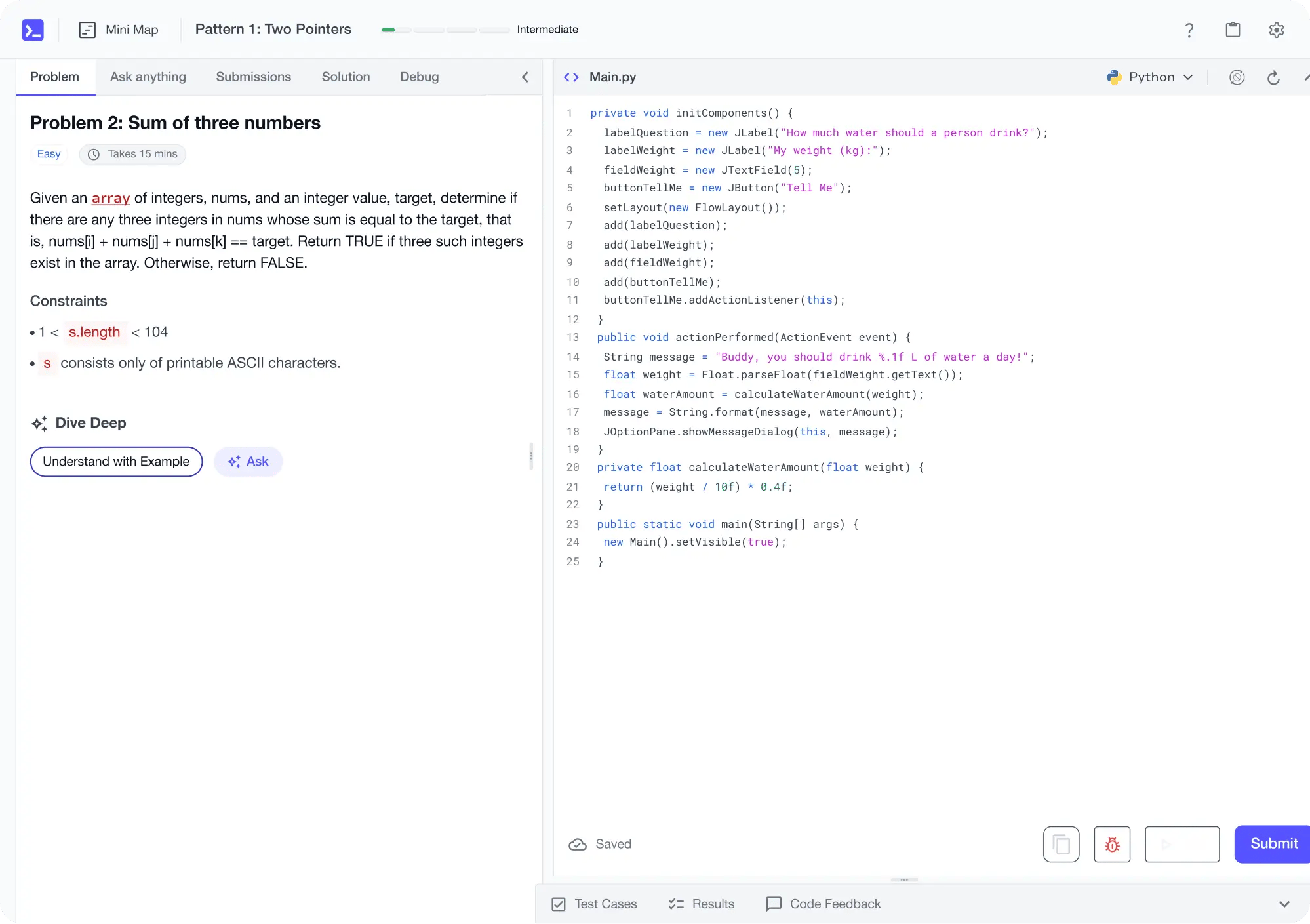
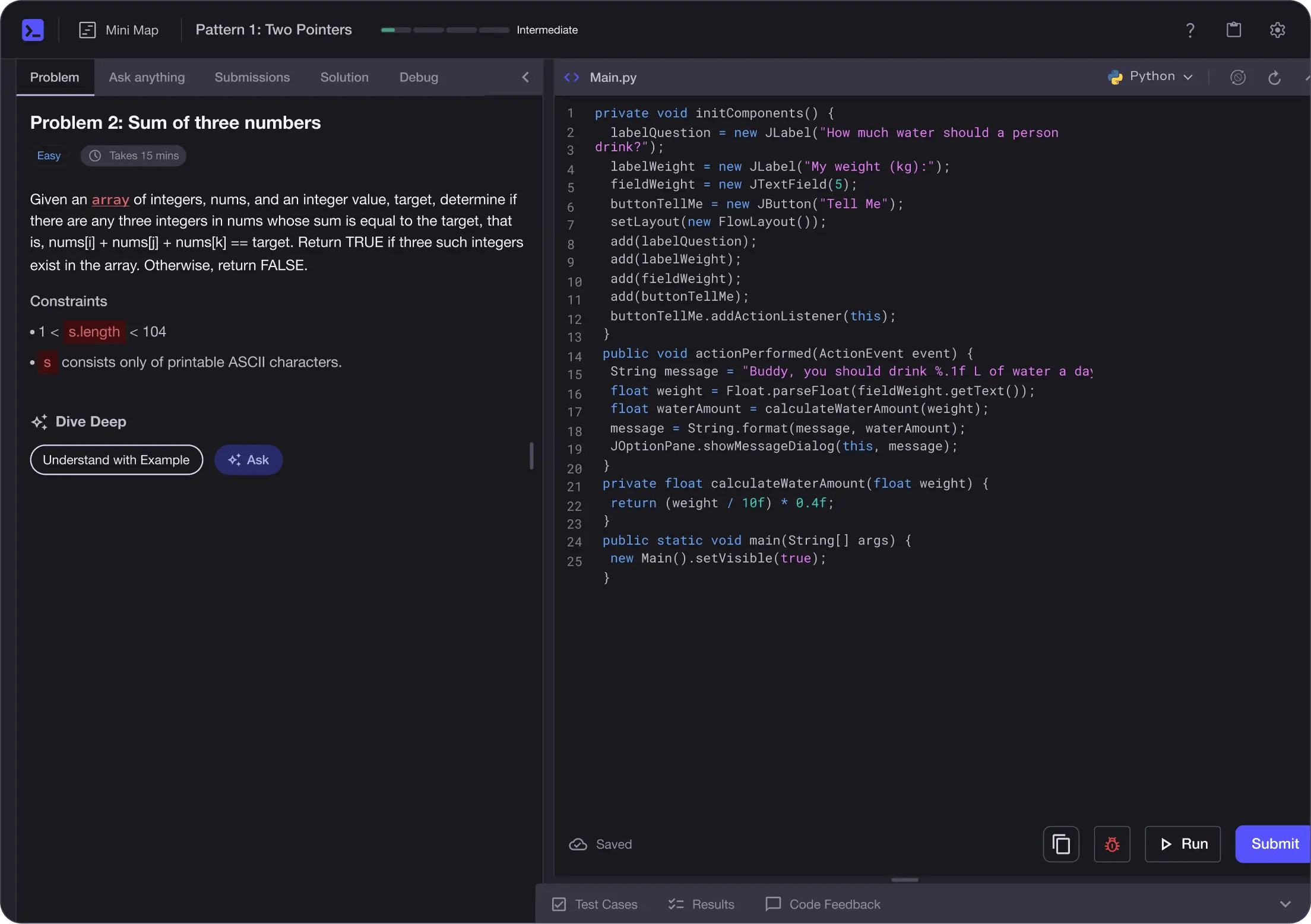
Learn by building with project-based lessons and in-browser code editor
Learn by DoingLearn by Doing
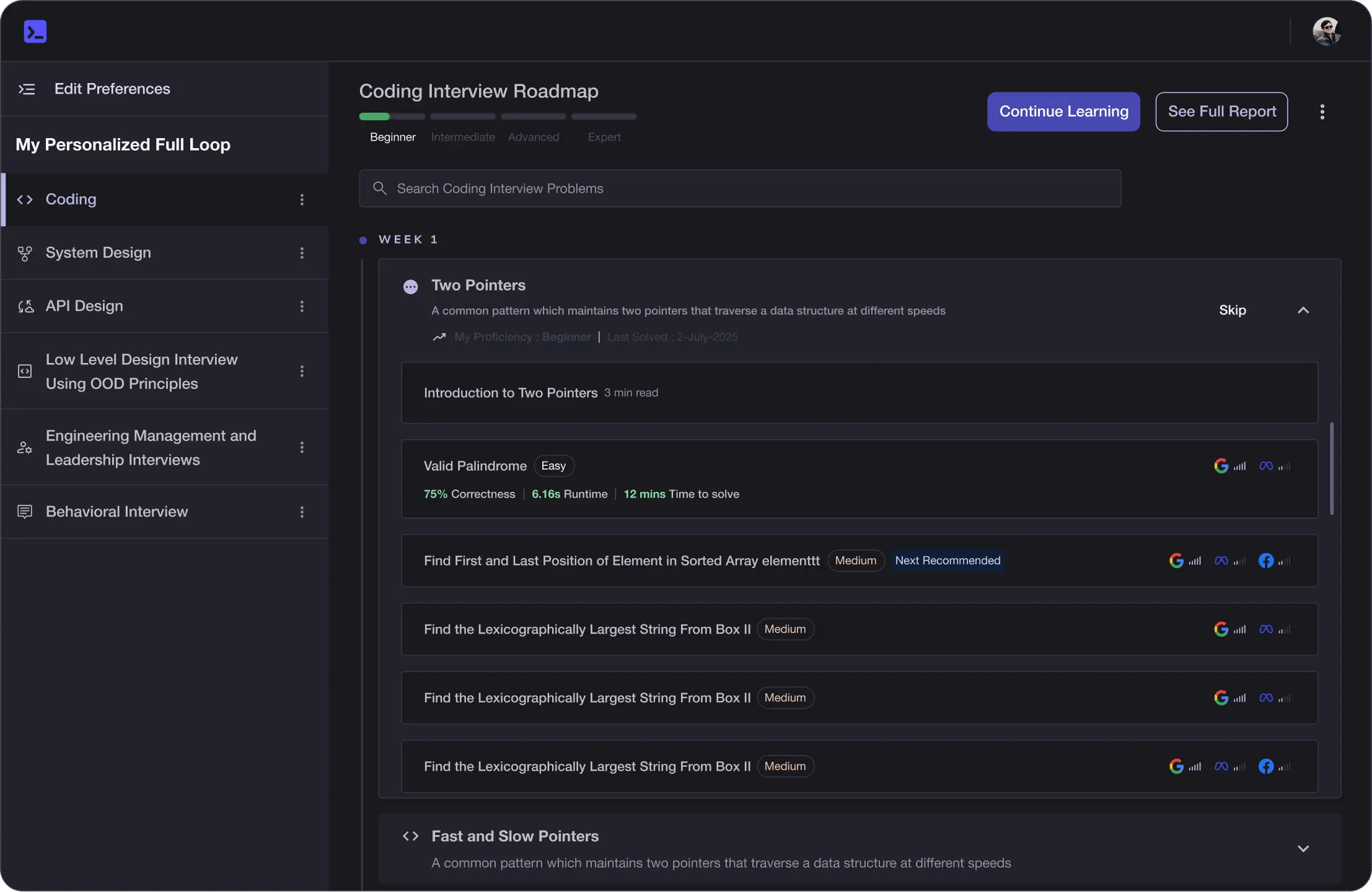
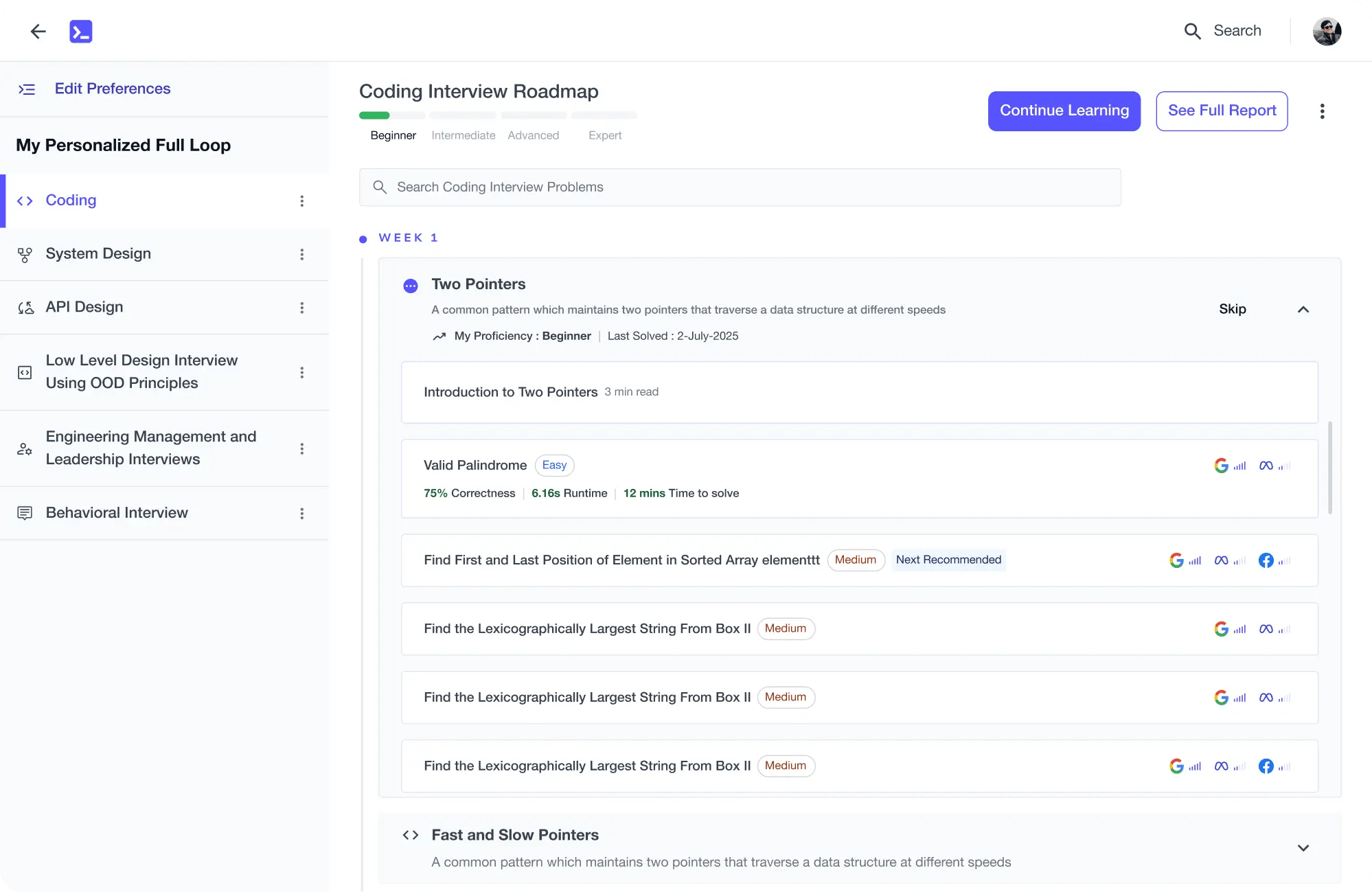
Personalized Roadmaps
The platform adapts to your strengths & skills gaps as you go
Learn by DoingLearn by Doing
Future-proof Your Career
Get hands-on with in-demand skills
Learn by DoingLearn by Doing
AI Code Mentor
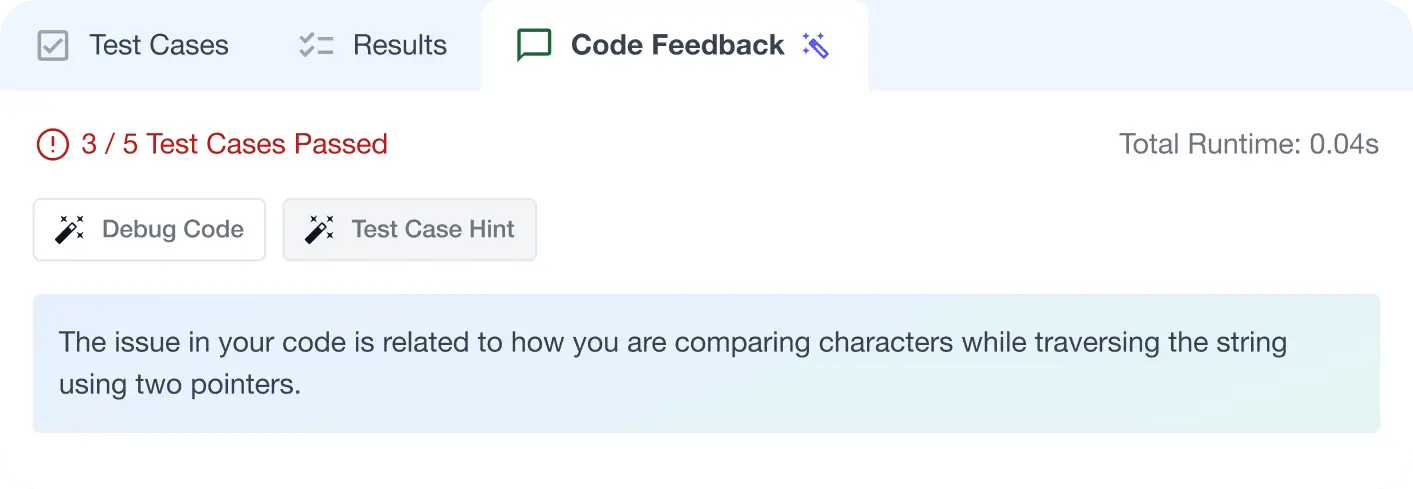
Write better code with AI feedback, smart debugging, and "Ask AI"
Learn by DoingLearn by Doing
MAANG+ Interview Prep
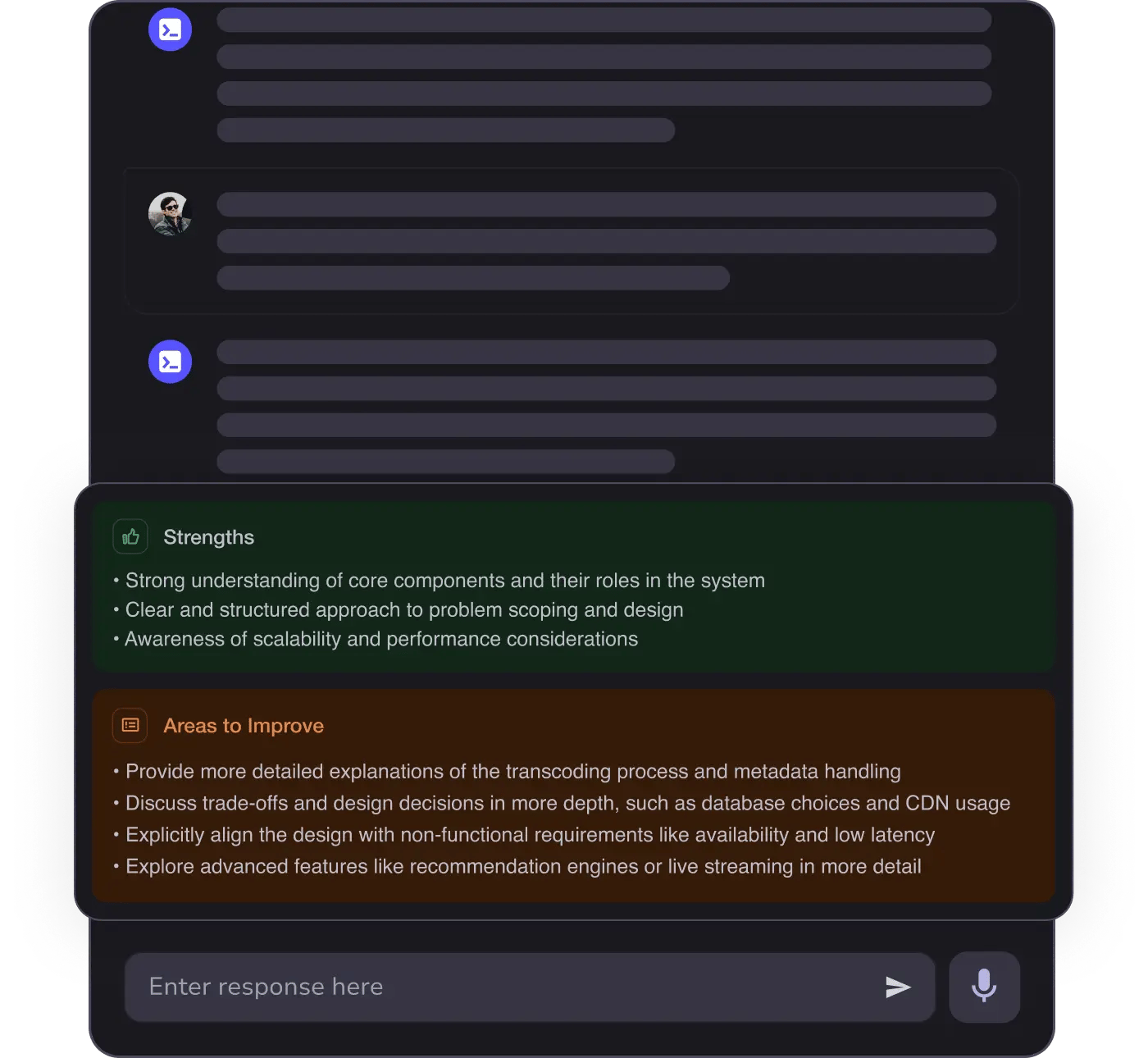
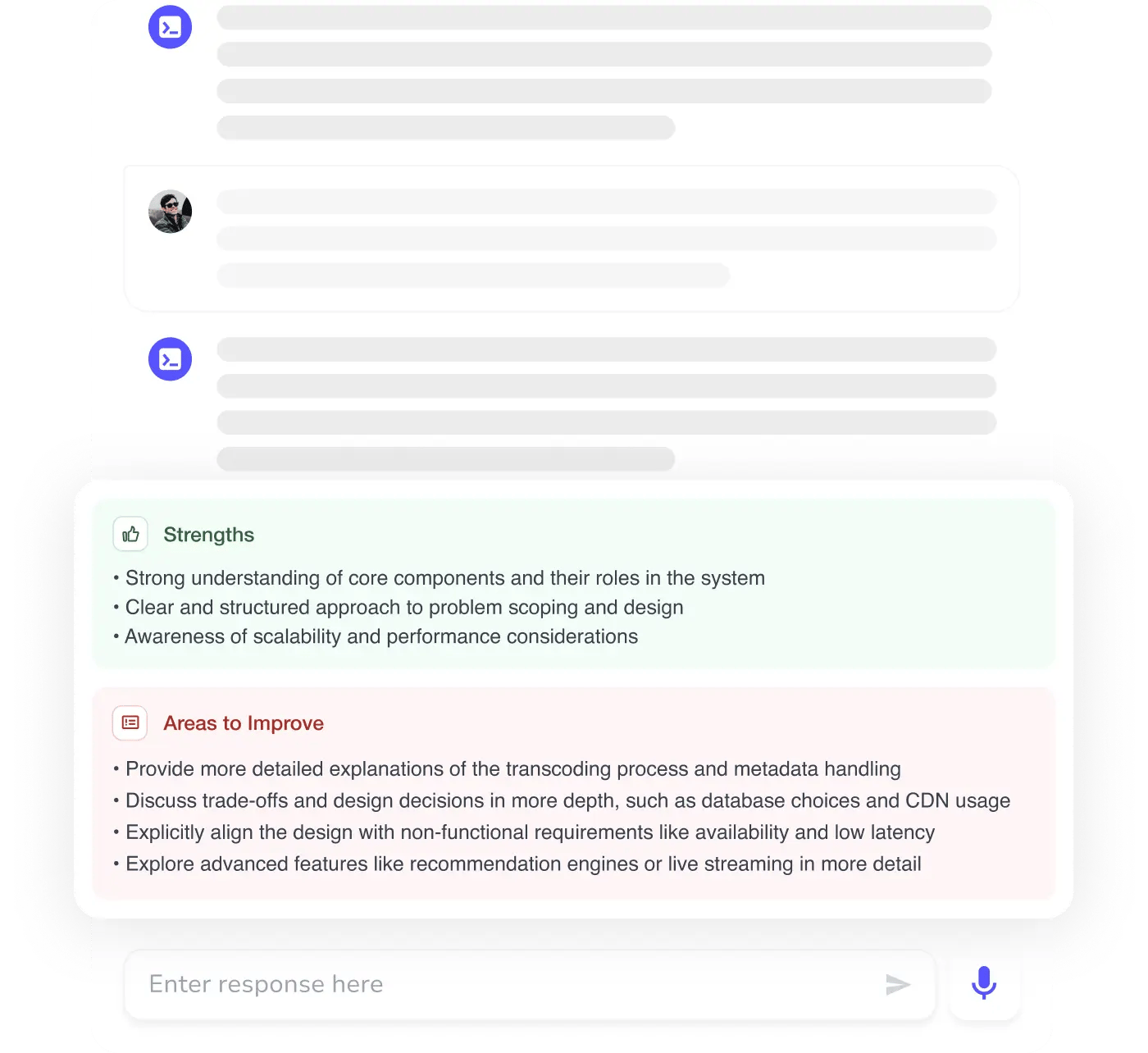
AI Mock Interviews simulate every technical loop at top companies
Learn by DoingLearn by Doing